Embrace the 30-Day Skill Challenge: Master a New Skill by Spring 2026
Are you ready to truly transform your capabilities and add a valuable asset to your personal or professional toolkit? The idea of learning something entirely new can be daunting, but what if you could achieve significant progress in just 30 days? Welcome to the 30-Day Skill Challenge! This isn’t just about trying something new; it’s about strategically picking a new skill and committing to its mastery, setting yourself up for an incredible Spring 2026.
In a world that’s constantly evolving, continuous learning isn’t just a buzzword; it’s a necessity. Whether you’re looking to boost your career prospects, ignite a new hobby, or simply challenge your mind, dedicating a month to focused learning can yield astonishing results. This comprehensive guide will walk you through every step of your 30-Day Skill Challenge, from selecting the perfect skill to implementing effective learning strategies and celebrating your achievements.
By the end of this article, you’ll have a clear roadmap, practical advice, and the motivation to not only start but successfully complete your challenge. Imagine greeting Spring 2026 with a brand-new, well-honed skill under your belt. Let’s dive in and make that vision a reality!
Why a 30-Day Skill Challenge? The Power of Short-Term, Focused Learning
The concept of a 30-Day Skill Challenge isn’t arbitrary. It’s rooted in psychological principles that make it incredibly effective for habit formation and skill acquisition. Thirty days is long enough to build momentum and see tangible progress, but short enough to feel achievable and prevent burnout. It creates a sense of urgency and focus that longer-term goals sometimes lack.
The Science Behind the 30-Day Push
- Habit Formation: While the exact time varies per individual, many studies suggest that consistent effort over roughly 30 days is often sufficient to embed a new behavior or routine. This consistency is crucial for skill development.
- Reduced Procrastination: The clear, defined deadline of 30 days acts as a powerful motivator, reducing the tendency to put off starting.
- Measurable Progress: With a focused timeline, you can easily track your progress daily or weekly, providing immediate feedback and boosting morale.
- Overcoming the Initial Hump: The first few weeks of learning a new skill are often the hardest. A 30-day commitment helps you push through this initial difficulty and get to a point where the skill starts to feel more natural.
- Springboard for Further Mastery: Even if you don’t achieve complete mastery in 30 days (which is a high bar for most complex skills), you will have built a strong foundation and developed a learning habit that can propel you towards continued excellence.
Think of it as an intensive sprint. You’re not aiming for perfection in 30 days, but rather significant, noticeable improvement and a solid base from which to continue growing. This structured approach makes the goal of mastering a new skill by Spring 2026 far more attainable.
Step 1: Choosing Your Skill Wisely for the 30-Day Skill Challenge
The first and arguably most critical step in your 30-Day Skill Challenge is selecting the right skill. This choice will dictate your motivation, the resources you’ll need, and ultimately, your success. Don’t rush this decision; consider what truly aligns with your interests, goals, and available time.
Questions to Guide Your Skill Selection:
- What genuinely excites you? Passion is a powerful fuel for learning. If you’re genuinely interested in the skill, you’ll be more likely to stick with it through challenges.
- What problem could this skill help you solve? Whether it’s a personal challenge (e.g., better organization) or a professional one (e.g., data analysis), a practical application provides strong motivation.
- Is it achievable within a 30-day framework (to a foundational level)? Some skills are inherently more complex than others. While you can start anything, consider what level of proficiency is realistic in a month. For instance, learning basic conversational Spanish is more feasible than becoming fluent.
- What resources are available to you? Do you have access to online courses, books, mentors, or real-world opportunities to practice?
- How does this skill align with your long-term goals (by Spring 2026 and beyond)? Will it open new career paths, enhance existing ones, or enrich your personal life significantly?
Examples of Skills Perfect for a 30-Day Challenge:
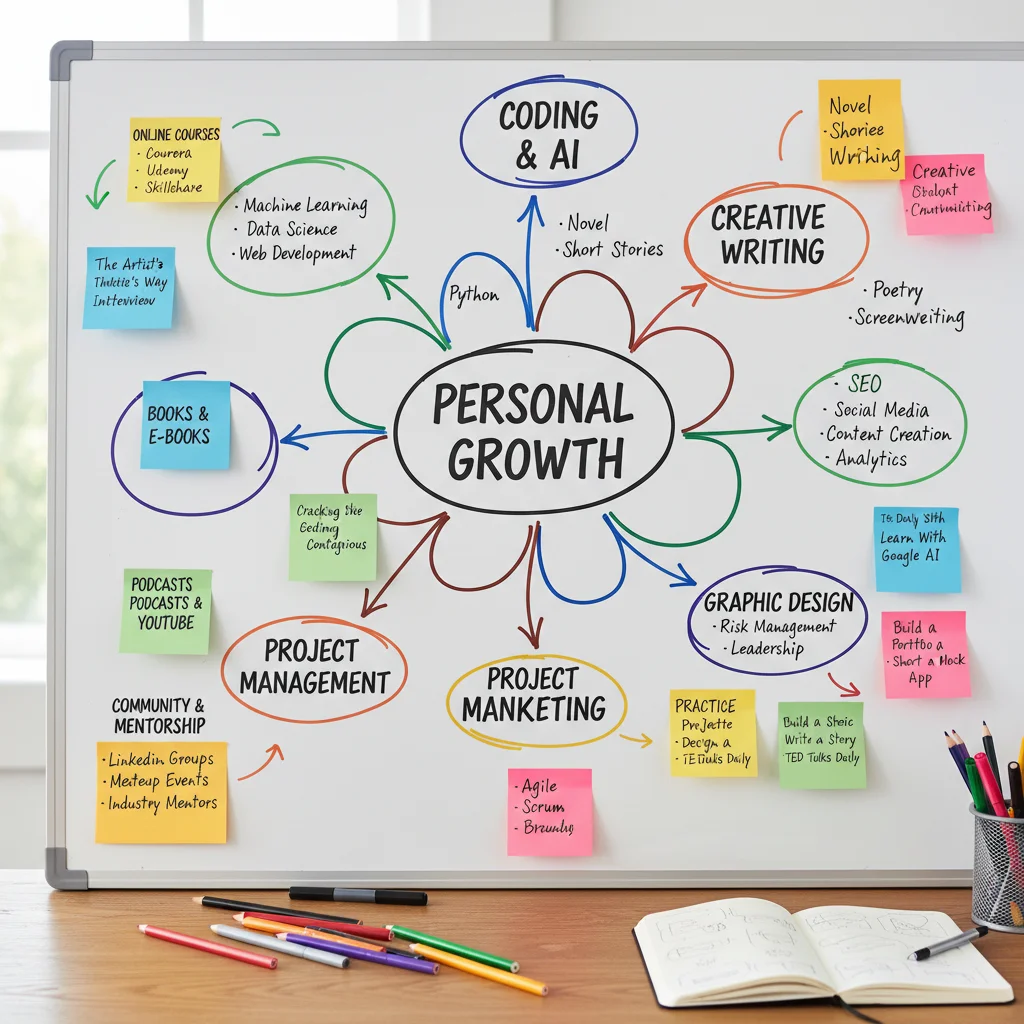
- Creative Skills: Basic drawing, digital illustration, learning a few chords on a guitar/ukulele, creative writing, photography fundamentals, basic video editing.
- Technical Skills: Introduction to coding (Python basics, HTML/CSS), spreadsheet mastery (Excel/Google Sheets), social media marketing fundamentals, using a specific software (e.g., Canva, Notion).
- Language Skills: Learning basic phrases and grammar of a new language, focusing on conversational starters.
- Life Skills: Basic cooking techniques, meal planning, effective budgeting, speed reading, meditation, public speaking basics.
- Physical Skills: Starting a running program (e.g., Couch to 5K), basic yoga poses, learning to juggle, improving flexibility.
Once you’ve identified a few potential skills, do a quick feasibility check. Can you dedicate at least 30-60 minutes daily (or a few hours weekly) to this? Do you have the necessary tools or can you acquire them easily? Your chosen skill is the cornerstone of your successful 30-Day Skill Challenge.
Step 2: Setting SMART Goals for Your 30-Day Skill Challenge
With your skill chosen, the next crucial step is to define what ‘mastery’ or ‘significant progress’ looks like within your 30-Day Skill Challenge. This is where SMART goals come into play: Specific, Measurable, Achievable, Relevant, and Time-bound.
Breaking Down SMART Goals for Skill Acquisition:
- Specific: Don’t just say ‘learn guitar.’ Say ‘learn to play three basic chords (G, C, D) and strum a simple song.’
- Measurable: How will you know you’ve achieved it? ‘Be able to hold a 5-minute basic conversation in French without notes’ or ‘complete a basic data analysis project in Excel.’
- Achievable: Is this realistic for 30 days, given your current knowledge and time commitment? Aim for significant progress, not complete fluency or expertise.
- Relevant: Does this goal align with your bigger picture, your ‘why’ for taking on this 30-Day Skill Challenge?
- Time-bound: This is inherently built into the 30-day framework, but also set mini-deadlines within the month (e.g., ‘by day 10, I will have learned X’).
Example SMART Goals:
- Skill: Basic HTML/CSS
SMART Goal: By the end of 30 days, I will be able to code a single-page static website with responsive design using HTML and CSS, displaying my portfolio or a simple blog layout. - Skill: Digital Illustration
SMART Goal: Within 30 days, I will have completed 10 unique digital illustrations, focusing on character design and basic shading techniques using Procreate, and shared them on a dedicated online platform. - Skill: Public Speaking
SMART Goal: Over 30 days, I will prepare and deliver three 5-minute speeches on different topics to a small group (friends/family/online community), focusing on eye contact and vocal variety, and incorporate feedback after each.
Clearly defined SMART goals will provide direction and a benchmark for your progress throughout the 30-Day Skill Challenge.
Step 3: Crafting Your Learning Strategy and Daily Routine
Once you’ve chosen your skill and set your goals, it’s time to design your daily attack plan. Consistency is the secret sauce for any successful 30-Day Skill Challenge.
Key Components of an Effective Learning Strategy:
- Dedicated Time Slot: Block out a specific time each day for learning and practice. Treat it like an important appointment you cannot miss. Even 15-30 minutes daily is more effective than one long session per week.
- Resource Gathering: Identify your primary learning resources. This could be an online course (Coursera, Udemy, Skillshare), a textbook, YouTube tutorials, a mentor, or a practice app. Don’t over-collect; choose 1-3 high-quality resources.
- Break Down the Skill: Deconstruct your chosen skill into smaller, manageable chunks. This makes learning less overwhelming. For instance, if learning to code, break it into variables, loops, functions, etc.
- Active Learning Over Passive Consumption: Don’t just watch tutorials or read books. Actively participate. If it’s a language, speak it. If it’s coding, write code. If it’s an instrument, play it.
- Spaced Repetition: Review previously learned material at increasing intervals. Flashcards (physical or digital like Anki) are excellent for this, especially for factual recall.
- Deliberate Practice: Focus on your weaknesses. Identify areas where you struggle and dedicate extra time to them. This is more effective than mindlessly repeating what you already do well.
- Seek Feedback: If possible, find someone who can review your work or listen to your practice. Constructive criticism accelerates learning.
- Document Your Journey: Keep a learning journal. Note down what you learned, what you struggled with, and your insights. This provides a record of progress and a space for reflection.
Structuring Your 30 Days: A Sample Week
- Week 1: Fundamentals & Basic Concepts
Focus on understanding the core principles, terminology, and basic operations. Get comfortable with the essential tools. - Week 2: Application & Simple Projects
Start applying what you’ve learned to small, tangible projects. Make mistakes, learn from them. - Week 3: Refinement & Problem Solving
Tackle slightly more complex challenges. Refine your techniques, troubleshoot issues, and deepen your understanding. - Week 4: Integration & Challenge Project
Work on a mini-project that integrates multiple aspects of the skill. Prepare to showcase your progress.
Remember, flexibility within your structure is key. Life happens, so if you miss a day, don’t give up. Just pick up where you left off. The goal is consistent effort towards your 30-Day Skill Challenge.
Step 4: Overcoming Obstacles and Staying Motivated During Your 30-Day Skill Challenge
No 30-Day Skill Challenge is without its hurdles. You’ll encounter moments of frustration, doubt, and waning motivation. Anticipating these challenges and having strategies to overcome them is vital for success.
Common Obstacles and Solutions:
- Lack of Time: Re-evaluate your schedule. Can you wake up 30 minutes earlier? Use your lunch break? Combine learning with another activity (e.g., listening to language lessons while commuting)? Even 15 minutes of focused practice is better than none.
- Feeling Overwhelmed: Break down your learning goals into even smaller micro-tasks. Focus on just one small step at a time. Remind yourself of your initial SMART goals.
- Frustration with Slow Progress: Learning is not always linear. There will be plateaus. Review your learning journal to see how far you’ve come. Celebrate small wins. Compare your current self to your day-one self, not to an expert.
- Loss of Motivation: Reconnect with your ‘why.’ Why did you start this 30-Day Skill Challenge? Visualize yourself having mastered the skill by Spring 2026. Reward yourself for milestones. Join a community or find an accountability partner.
- Distractions: Create a dedicated, distraction-free learning environment. Turn off notifications. Use focus apps.
Maintaining Motivation:
- Celebrate Small Wins: Finished a chapter? Successfully completed a practice exercise? Give yourself a pat on the back.
- Track Your Progress Visually: A habit tracker, a progress bar, or a simple calendar where you mark off each day you practice can be incredibly motivating. Seeing your streak grow encourages consistency.
- Connect with Others: Share your journey on social media, join online forums related to your skill, or find a friend doing a similar challenge. Peer support and a sense of community can be powerful motivators.
- Vary Your Learning Methods: If you find yourself getting bored, switch up how you’re learning. Watch a documentary, listen to a podcast, try a different exercise.
- Visualize Success: Regularly take a moment to imagine yourself confidently using your new skill. This positive reinforcement can reignite your drive.
Remember, the goal isn’t to be perfect, but to be persistent. Every day you show up for your 30-Day Skill Challenge is a victory.
Step 5: The Final Stretch & Beyond – Sustaining Your New Skill by Spring 2026
You’re nearing the end of your 30-Day Skill Challenge! This final week is about consolidating your learning, reflecting on your journey, and planning for continued growth. Reaching day 30 isn’t the finish line for mastery, but it’s a monumental achievement that sets you up perfectly for Spring 2026.
Consolidating Your Learning:
- Review Everything: Go back through your notes, practice exercises, and projects. Identify key takeaways and areas that still need work.
- Create a ‘Cheat Sheet’ or Summary: Condense the most important concepts, commands, or techniques into a quick-reference guide.
- Teach Someone Else: Explaining what you’ve learned to another person is one of the most effective ways to solidify your own understanding.
- Final Project/Demonstration: If your SMART goal included a final project, dedicate this last week to perfecting it. This is your chance to showcase your progress from the 30-Day Skill Challenge.
Reflecting on Your Journey:
Take time to appreciate how far you’ve come. What did you learn about the skill itself? What did you learn about your own learning process? What challenges did you overcome? This reflection is crucial for future skill acquisition.
Planning for Continued Mastery by Spring 2026 and Beyond:
The 30-day mark is a milestone, not a conclusion. To truly master your new skill by Spring 2026, you need a plan for ongoing practice and application.
- Integrate into Your Life: How can you naturally incorporate this skill into your daily or weekly routine? If you learned a language, try to use it in conversations or media. If it’s a technical skill, find opportunities to apply it at work or in personal projects.
- Set New, Higher Goals: What’s the next level? What specific aspect of the skill do you want to tackle next? Keep your goals SMART.
- Find a Community: Join clubs, online forums, meetups, or professional groups related to your skill. Learning from and collaborating with others is invaluable.
- Continue to Seek Feedback: Don’t stop asking for constructive criticism.
- Embrace Lifelong Learning: See this 30-Day Skill Challenge as the beginning of a continuous journey of self-improvement. The ability to learn new things quickly is a skill in itself.
The Benefits of Mastering a New Skill by Spring 2026
Completing a 30-Day Skill Challenge and continuing on the path to mastery by Spring 2026 brings a multitude of benefits:
- Enhanced Career Opportunities: New skills make you more valuable in the job market, opening doors to promotions, new roles, or even entirely new industries.
- Increased Confidence: The sense of accomplishment from learning something new is incredibly empowering and boosts self-esteem.
- Improved Cognitive Function: Learning challenges your brain, improving memory, problem-solving abilities, and overall cognitive health.
- New Hobbies and Passions: Discovering a new skill can enrich your personal life, providing a creative outlet, a source of joy, or a way to connect with others.
- Adaptability and Resilience: The process of learning to learn, and overcoming the frustrations inherent in skill acquisition, builds mental toughness and adaptability.
- Broadened Perspectives: Engaging with new knowledge or practices can change your worldview and foster empathy.
By taking on this 30-Day Skill Challenge, you are not just acquiring a new ability; you are investing in your personal growth, resilience, and future success. Imagine the pride and satisfaction of looking back at Spring 2026 and knowing you dedicated yourself to something meaningful and achieved it.
Ready to Start Your 30-Day Skill Challenge?
The time to act is now. Don’t wait for the perfect moment; create it. Choose your skill, set your SMART goals, devise your learning strategy, and commit to showing up every day for your 30-Day Skill Challenge. The journey might have its ups and downs, but the reward of mastering a new skill by Spring 2026 will be immeasurable.
What skill will you choose? Share your plans in the comments below! Let’s inspire each other to embark on this exciting path of continuous learning and personal transformation. Your future, more skilled self will thank you.